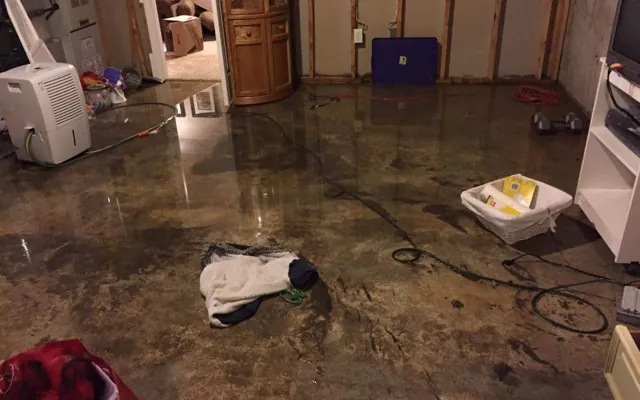
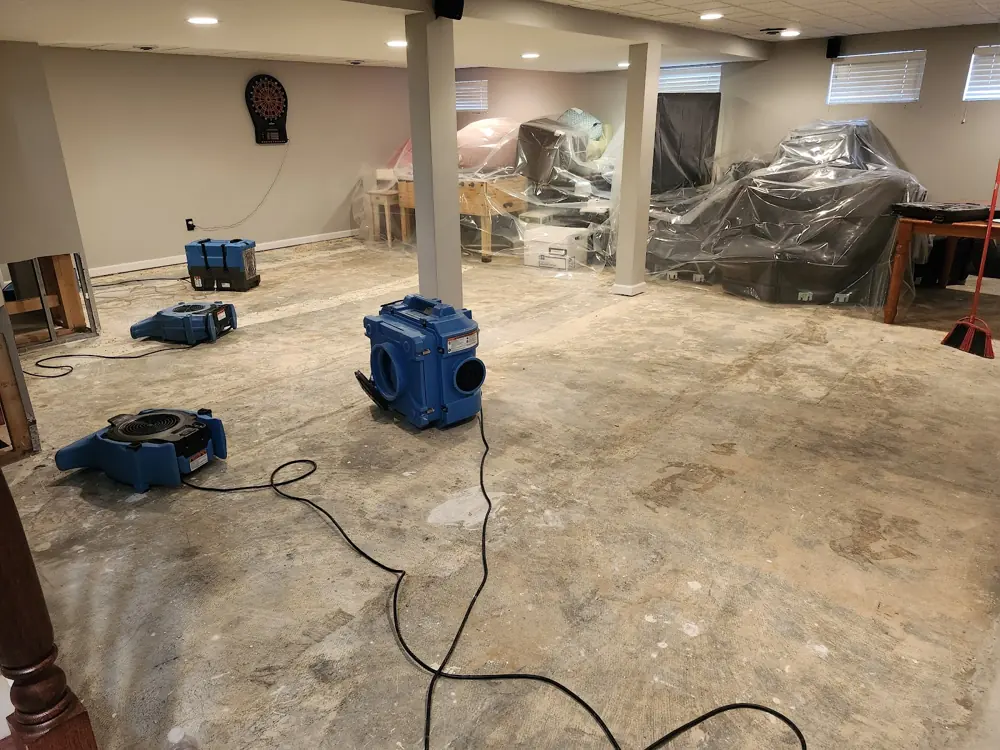
A failing water heater can seep for weeks or let go all at once and flood the space around it. San Diego crews respond around the clock to extract the water and dry the garage, closet, or utility area before the damage spreads.

A crew typically arrives within about an hour to confirm the water and, where needed, the gas or power to the heater are shut off and assess how far the water spread.
Standing water is extracted from the garage, closet, or utility area, and stored items in the water are moved out and sorted.
Saturated drywall, baseboards, and flooring are assessed, and sections are removed where moisture readings show they cannot dry in place.
Air movers and dehumidifiers dry the area to a verified moisture target, with readings logged for the claim while the homeowner arranges a heater replacement.

While help is on the way, these first steps, done only where it is safe, limit the damage and protect the insurance claim.
Shut the supply off at the source, or close the home's main valve if the source is not obvious. Stopping the flow limits the damage more than anything else.
Switch off electricity to the affected area, but only if the breaker can be reached without standing in or touching the water.
Get a crew dispatched right away. The sooner extraction and drying begin, the more flooring, drywall, and belongings can be saved.
Take photos and a short video of the water and the affected rooms before anything is moved, so the insurance claim starts strong.
Water heater leak cleanup in San Diego typically runs from about $800 to $3,500 depending on whether the tank seeped slowly or failed all at once, how far the water spread, and how much drywall and flooring must be removed. A contained garage leak sits on the low end, while a full failure that reached adjoining rooms sits toward the high end. Replacing the water heater is billed separately by a qualified plumber, while extraction and drying are documented for the water-damage claim.
Crews reach San Diego and San Diego County fast, from Downtown, North Park, Hillcrest, and Point Loma to Coronado, La Jolla, Pacific Beach, National City, La Mesa, and Spring Valley. See the full list on the areas served across San Diego page.
See all areas servedEvery loss is photographed, measured, and logged from the first visit, so the paperwork holds up with the insurance carrier.
Technicians follow recognized IICRC drying standards and prove it with daily moisture readings on San Diego homes, not guesswork.
Emergency dispatch any hour of the day or night, with a real crew on the way across San Diego County, not a callback in the morning.
A real crew dispatched any hour, not a callback in the morning.
Trained technicians following recognized IICRC drying standards.
Truck-mounted, portable, and submersible for any size loss.
The loss is documented and billed to the carrier directly.
Watch for water or rust around the base of the tank, a metallic or discolored tint to the hot water, popping or rumbling sounds from sediment, and dampness near the fittings or the pressure valve. In San Diego, hard water speeds up the sediment buildup and corrosion that lead to these warning signs.
No. Replacing or repairing the water heater is plumbing work handled by a qualified plumber. This service covers extracting the water, moving belongings, removing unsalvageable materials, and drying the garage, closet, or utility area to a verified target, along with documenting the damage for the claim.
A typical residential tank holds forty to fifty gallons, and a full failure can release all of it at once, plus more if the supply keeps feeding the tank until it is shut off. That is enough to flood a garage or utility area and reach adjoining rooms, which is why quick shutoff and extraction matter.
Mineral-rich hard water builds sediment inside the tank and accelerates interior corrosion, and coastal salt air works on the exterior connections. Together they wear out the tank and its fittings faster than in areas with softer water and drier air, so an aging heater is a frequent source of local water damage.
Sudden accidental failures are commonly covered under a standard policy, while damage from a heater that leaked slowly and was neglected may be treated differently. Documenting that the failure was sudden, with moisture readings and photos, helps the homeowner submit an accurate claim.
San Diego crews are on call 24 hours a day, local and fast, and can be on the way within the hour.
Call (858) 533-0936