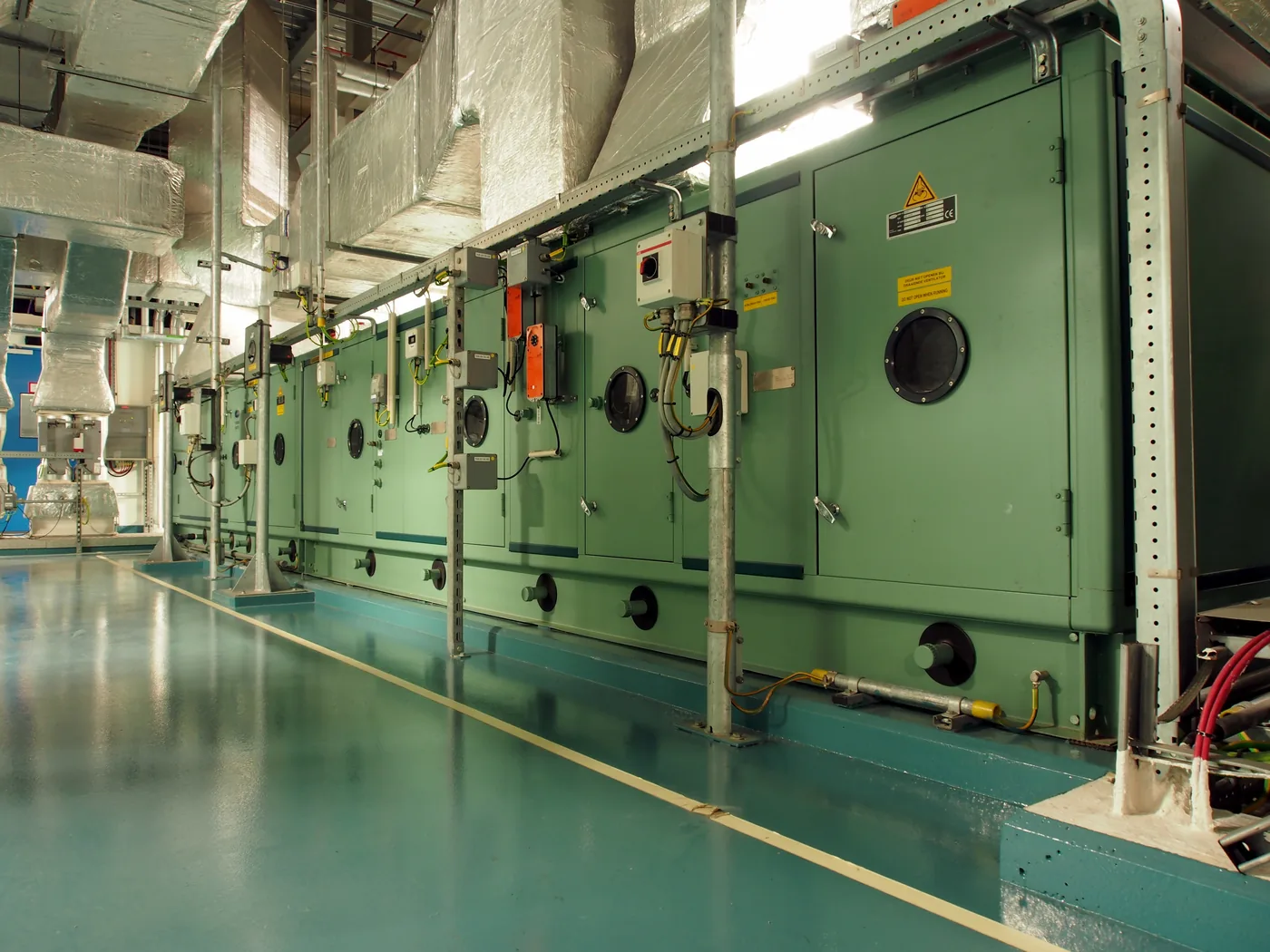
An air handler quietly sheds condensation, and a clogged drain line sends it into the ceiling or wall. San Diego crews respond around the clock to dry the framing and drywall and clear the moisture an HVAC unit leaves behind.

A crew typically arrives within about an hour to confirm the moisture is coming from the air handler or condensate line rather than a roof or plumbing leak.
The system is shut down and the overflow contained so it stops feeding the wet area, and the homeowner is directed to an HVAC technician for the drain or pan repair.
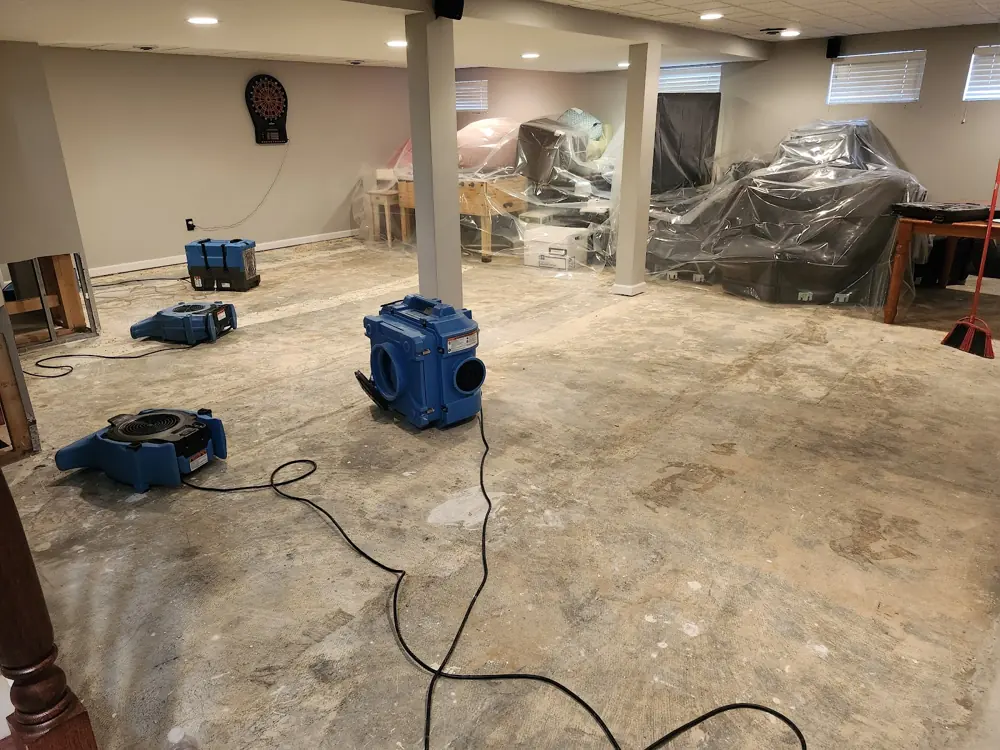
Air movers and dehumidifiers dry the affected ceiling, wall, and framing around the unit, and saturated insulation is removed where it cannot dry in place.
Drying continues to a verified moisture target, and photos and readings are logged so the homeowner has documentation for the insurance carrier.

While help is on the way, these first steps, done only where it is safe, limit the damage and protect the insurance claim.
Shut the supply off at the source, or close the home's main valve if the source is not obvious. Stopping the flow limits the damage more than anything else.
Switch off electricity to the affected area, but only if the breaker can be reached without standing in or touching the water.
Get a crew dispatched right away. The sooner extraction and drying begin, the more flooring, drywall, and belongings can be saved.
Take photos and a short video of the water and the affected rooms before anything is moved, so the insurance claim starts strong.
HVAC condensation cleanup in San Diego typically runs from about $700 to $3,000 depending on how long the overflow ran, whether it reached insulation and framing, and how much drywall must be removed rather than dried in place. A quickly caught drip sits on the low end, while a long-running overflow that soaked a ceiling and insulation sits toward the high end. The crew documents moisture readings and photos so the homeowner can submit an accurate claim while an HVAC technician repairs the line or pan.
Crews reach San Diego and San Diego County fast, from Downtown, North Park, Hillcrest, and Point Loma to Coronado, La Jolla, Pacific Beach, National City, La Mesa, and Spring Valley. See the full list on the areas served across San Diego page.
See all areas servedEvery loss is photographed, measured, and logged from the first visit, so the paperwork holds up with the insurance carrier.
Technicians follow recognized IICRC drying standards and prove it with daily moisture readings on San Diego homes, not guesswork.
Emergency dispatch any hour of the day or night, with a real crew on the way across San Diego County, not a callback in the morning.
A real crew dispatched any hour, not a callback in the morning.
Trained technicians following recognized IICRC drying standards.
Truck-mounted, portable, and submersible for any size loss.
The loss is documented and billed to the carrier directly.
A telltale sign is a stain that appears or spreads on dry days when the air conditioning is running, rather than during rain. Because attic and closet air handlers sit near ceilings and walls, condensation overflow often mimics a roof leak, and the crew traces the moisture to confirm the true source before drying.
The most common causes are a clogged condensate line, where algae and debris block the drain, and a rusted or cracked drain pan that no longer holds the water. When either fails, the condensation the system normally drains away backs up and overflows into the surrounding structure instead.
No. Clearing the condensate line, replacing the drain pan, or servicing the unit is handled by an HVAC technician. This service covers drying the ceiling, wall, and framing the overflow affected, removing unsalvageable insulation, and documenting the water damage for the claim.
Marine-layer humidity gives air conditioning systems more moisture to pull from the air, so they produce more condensation to drain. Combined with air handlers commonly placed in attics and closets, that means an overflow has both more water and a more concealed path into the ceiling and walls.
It varies. A sudden overflow may be covered, while damage from a drain that was clogged and neglected over time is often treated as a maintenance issue. Documenting the cause and the extent with photos and moisture readings helps the homeowner understand what the carrier is likely to cover.
San Diego crews are on call 24 hours a day, local and fast, and can be on the way within the hour.
Call (858) 533-0936