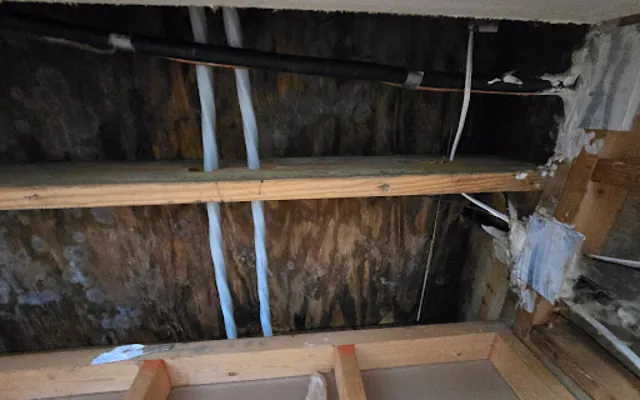
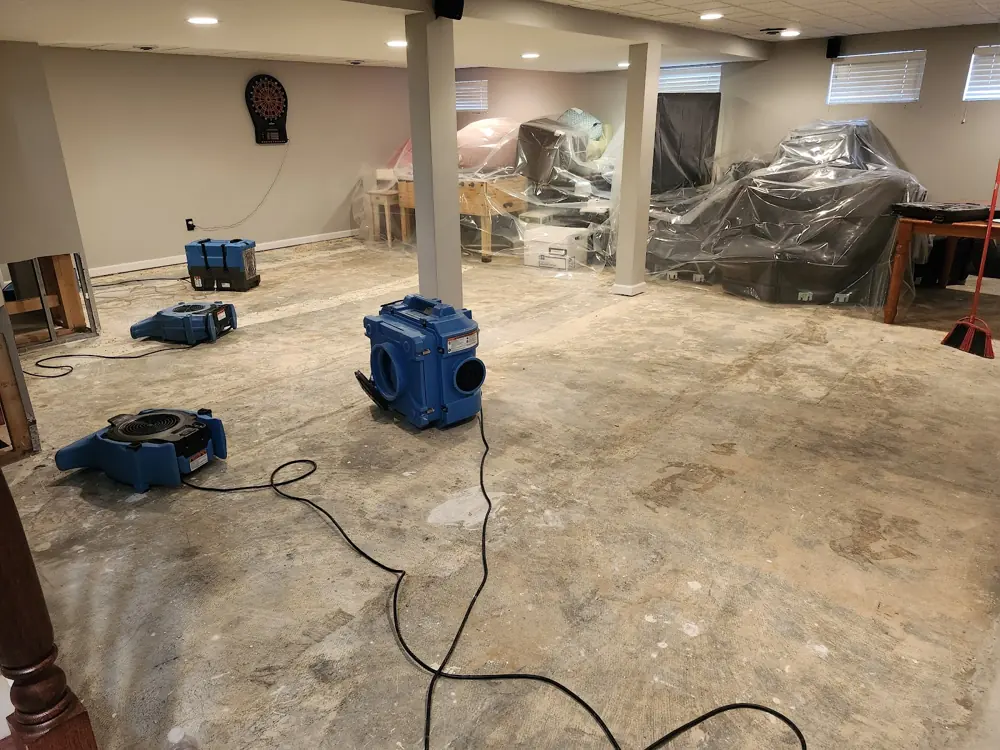
When a roof leak lets storm water into the attic and ceilings, drying it fast keeps a stain from becoming structural damage. San Diego crews respond around the clock to contain the source and dry the interior before mold takes hold.

A crew typically arrives within about an hour to trace where the water entered, check the attic and ceilings, and map how far the moisture spread inside.
The entry point is contained or tarped where possible, and the homeowner is directed to a qualified roofer for permanent repair once the interior is stabilized.
Saturated insulation and unsalvageable drywall are removed, and air movers and dehumidifiers dry the attic framing, ceilings, and walls to a verified target.
Moisture readings confirm the interior is dry, and photos and logs are prepared so the homeowner has documentation for the insurance carrier.

While help is on the way, these first steps, done only where it is safe, limit the damage and protect the insurance claim.
Shut the supply off at the source, or close the home's main valve if the source is not obvious. Stopping the flow limits the damage more than anything else.
Switch off electricity to the affected area, but only if the breaker can be reached without standing in or touching the water.
Get a crew dispatched right away. The sooner extraction and drying begin, the more flooring, drywall, and belongings can be saved.
Take photos and a short video of the water and the affected rooms before anything is moved, so the insurance claim starts strong.
Roof leak water damage cleanup in San Diego typically runs from about $1,200 to $5,500 depending on how much attic insulation and ceiling drywall is saturated, how many rooms the water reached, and how much material must be removed rather than dried. A single localized leak caught early sits on the low end, while a storm that soaked the attic and multiple ceilings sits toward the high end. The crew documents the source, moisture readings, and photos so the homeowner can submit an accurate claim while a roofer handles the repair.
Crews reach San Diego and San Diego County fast, from Downtown, North Park, Hillcrest, and Point Loma to Coronado, La Jolla, Pacific Beach, National City, La Mesa, and Spring Valley. See the full list on the areas served across San Diego page.
See all areas servedEvery loss is photographed, measured, and logged from the first visit, so the paperwork holds up with the insurance carrier.
Technicians follow recognized IICRC drying standards and prove it with daily moisture readings on San Diego homes, not guesswork.
Emergency dispatch any hour of the day or night, with a real crew on the way across San Diego County, not a callback in the morning.
A real crew dispatched any hour, not a callback in the morning.
Trained technicians following recognized IICRC drying standards.
Truck-mounted, portable, and submersible for any size loss.
The loss is documented and billed to the carrier directly.
Roof leaks usually appear or worsen during and right after rain and show up on top-floor ceilings and wall tops near exterior walls. Plumbing and HVAC leaks tend to spread on dry days. The crew traces the moisture path to confirm the source before drying, so the right problem gets addressed.
No. Roof repair is handled by a qualified roofing contractor. This service covers containing the active leak, removing saturated insulation and unsalvageable drywall, drying the attic and interior to a verified target, and documenting the water damage for the insurance claim.
The region can go months with little or no rain, so a worn roof shows no symptoms during the long dry season. When the first strong winter storm arrives, all the weak points, cracked tiles, worn valleys, and failed flashing, can leak at the same time, which is why several rooms may be affected together.
Sometimes. Lightly stained drywall that dries to a verified target without sagging can often be sealed and repainted, while drywall that bulged or held water long enough to weaken is removed and replaced. Wet attic insulation above it is usually removed regardless.
Sudden storm-driven roof leaks are often covered, while damage traced to long-neglected roof wear may be treated as a maintenance issue. Documenting the storm event and the extent with photos and moisture readings helps the homeowner submit an accurate claim.
San Diego crews are on call 24 hours a day, local and fast, and can be on the way within the hour.
Call (858) 533-0936