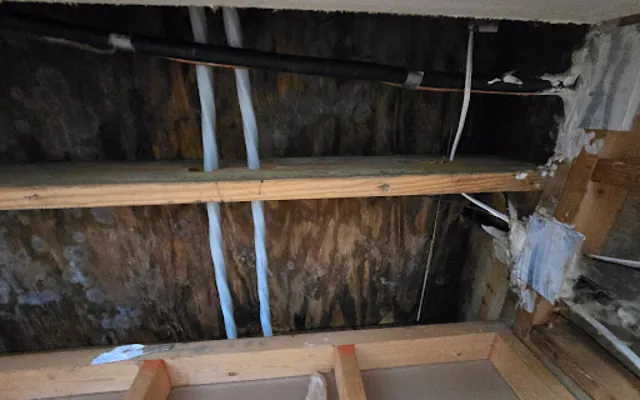
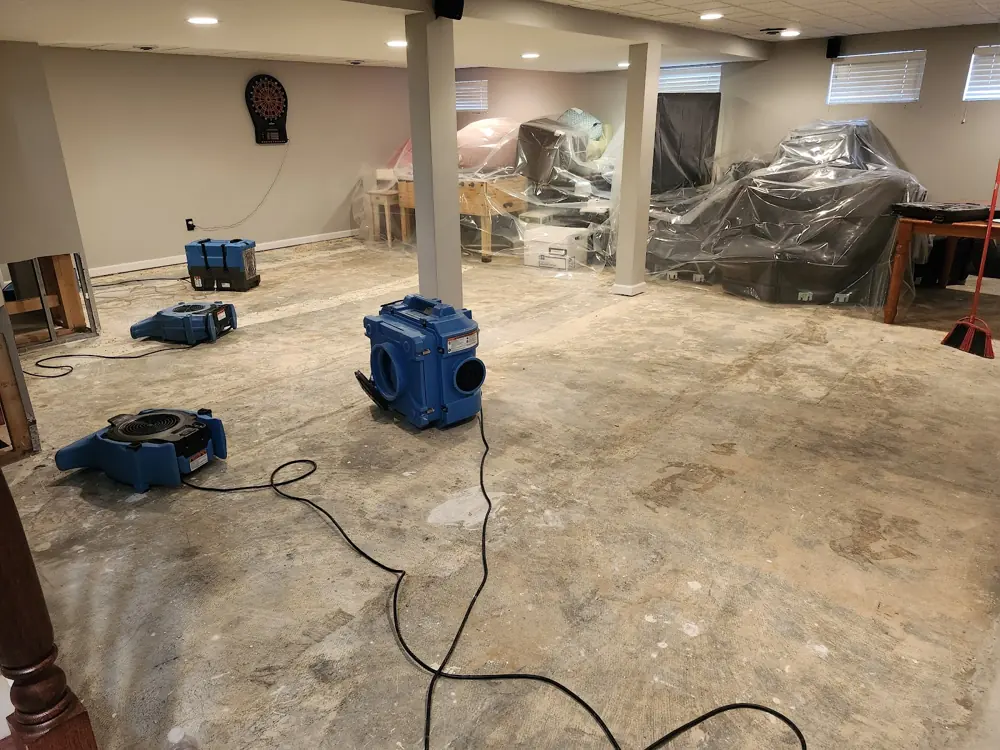
Ice dams need freezing roofs and snow, which San Diego does not get. The real cold-season roof risk here is winter storm leaks and runoff, and crews respond around the clock to dry the interior and document the true source.

A crew typically arrives within about an hour to trace where storm water entered, check the attic and ceilings, and map how far the moisture spread inside.
The entry point is contained or tarped where possible, and the homeowner is directed to a qualified roofer for permanent repair once the interior is stabilized.
Air movers and dehumidifiers dry the attic framing, ceilings, and wall tops, and saturated insulation is removed where it cannot dry in place.
Drying continues to a verified moisture target, and the true cause, storm intrusion rather than ice, is documented with photos and readings for the claim.

While help is on the way, these first steps, done only where it is safe, limit the damage and protect the insurance claim.
Shut the supply off at the source, or close the home's main valve if the source is not obvious. Stopping the flow limits the damage more than anything else.
Switch off electricity to the affected area, but only if the breaker can be reached without standing in or touching the water.
Get a crew dispatched right away. The sooner extraction and drying begin, the more flooring, drywall, and belongings can be saved.
Take photos and a short video of the water and the affected rooms before anything is moved, so the insurance claim starts strong.
Storm-driven roof water cleanup in San Diego typically runs from about $1,200 to $5,000 depending on how much attic insulation and ceiling drywall is saturated, how far the water traveled inside, and how much material must be removed. A single localized leak caught early sits on the low end, while widespread attic and ceiling saturation sits toward the high end. The crew documents the true storm source with moisture readings and photos so the homeowner can submit an accurate claim, since freeze-related coverage terms rarely apply here.
Crews reach San Diego and San Diego County fast, from Downtown, North Park, Hillcrest, and Point Loma to Coronado, La Jolla, Pacific Beach, National City, La Mesa, and Spring Valley. See the full list on the areas served across San Diego page.
See all areas servedEvery loss is photographed, measured, and logged from the first visit, so the paperwork holds up with the insurance carrier.
Technicians follow recognized IICRC drying standards and prove it with daily moisture readings on San Diego homes, not guesswork.
Emergency dispatch any hour of the day or night, with a real crew on the way across San Diego County, not a callback in the morning.
A real crew dispatched any hour, not a callback in the morning.
Trained technicians following recognized IICRC drying standards.
Truck-mounted, portable, and submersible for any size loss.
The loss is documented and billed to the carrier directly.
No, in any practical sense. Ice dams require sustained freezing temperatures and snow on the roof, and San Diego's mild coastal climate produces neither. Homeowners searching for ice dam help here are almost always dealing with winter storm roof leaks, which are handled and documented differently.
Winter atmospheric-river storms are the main threat. Wind-driven rain finds its way under aging tile, shingles, flashing, and worn valleys, especially on older uptown and mesa homes, and drips into the attic and ceilings. The interior damage can resemble an ice dam leak, but the cause is rain intrusion.
No. Roof repair is handled by a qualified roofing contractor. This service covers containing the leak, drying the attic, ceilings, and walls the water reached, removing unsalvageable insulation, and documenting the true storm source for the insurance claim.
Some policies handle freeze and ice damage under different terms than general storm damage. Since ice dams do not occur here, documenting the loss accurately as storm-driven roof intrusion, with photos and moisture readings, helps ensure the claim reflects what actually happened.
Quickly. Water in the attic and ceiling saturates insulation and framing and can start mold within a couple of days in San Diego's humidity. Prompt containment and drying limit the damage and preserve more of the material while a roofer arranges the permanent fix.
San Diego crews are on call 24 hours a day, local and fast, and can be on the way within the hour.
Call (858) 533-0936