The faster standing water is removed, the less it soaks into floors and walls. San Diego crews respond around the clock with truck-mounted and submersible extraction to pull water out fast and set up the drying that follows.

A crew typically arrives within about an hour, confirms the water source is controlled, and checks for electrical and safety hazards before entering standing water.
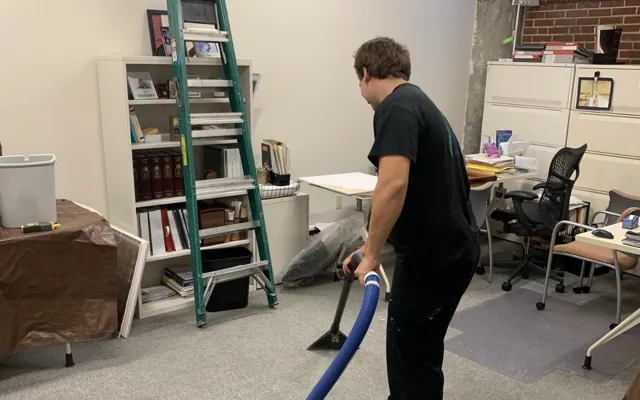
Truck-mounted units and submersible pumps remove standing water fast, and specialty tools pull water from carpet, pad, and beneath hard flooring.
Moisture meters and thermal imaging locate water that spread into walls, subfloors, and adjoining rooms so nothing wet is left behind.
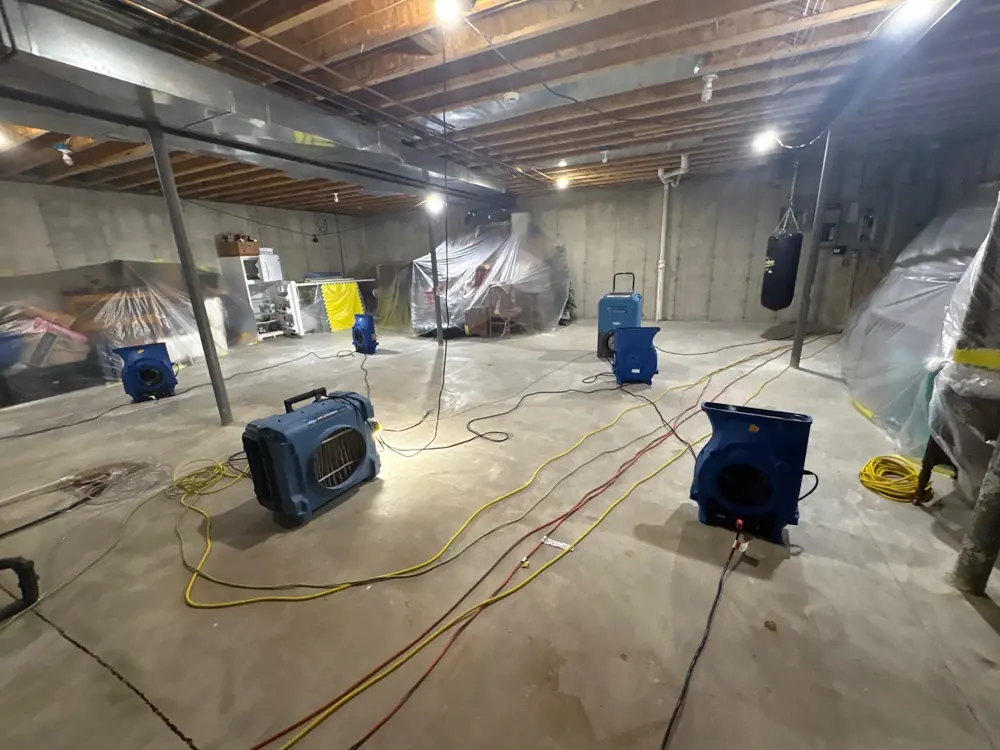
Air movers and dehumidifiers are staged for structural drying, and initial readings and photos are logged to document the loss for the claim.

While help is on the way, these first steps, done only where it is safe, limit the damage and protect the insurance claim.
Shut the supply off at the source, or close the home's main valve if the source is not obvious. Stopping the flow limits the damage more than anything else.
Switch off electricity to the affected area, but only if the breaker can be reached without standing in or touching the water.
Get a crew dispatched right away. The sooner extraction and drying begin, the more flooring, drywall, and belongings can be saved.
Take photos and a short video of the water and the affected rooms before anything is moved, so the insurance claim starts strong.
Water extraction in San Diego typically runs from about $500 to $3,000 as the first phase of a water-damage job, depending on the volume of water, the area affected, and how much specialty extraction from carpet and flooring is needed. A small clean-water loss sits on the low end, while a large or contaminated flood sits toward the high end and leads into a broader drying scope. The crew logs the initial conditions, readings, and photos so the full loss is documented for the homeowner's carrier.
Crews reach San Diego and San Diego County fast, from Downtown, North Park, Hillcrest, and Point Loma to Coronado, La Jolla, Pacific Beach, National City, La Mesa, and Spring Valley. See the full list on the areas served across San Diego page.
See all areas servedEvery loss is photographed, measured, and logged from the first visit, so the paperwork holds up with the insurance carrier.
Technicians follow recognized IICRC drying standards and prove it with daily moisture readings on San Diego homes, not guesswork.
Emergency dispatch any hour of the day or night, with a real crew on the way across San Diego County, not a callback in the morning.
A real crew dispatched any hour, not a callback in the morning.
Trained technicians following recognized IICRC drying standards.
Truck-mounted, portable, and submersible for any size loss.
The loss is documented and billed to the carrier directly.
Because standing water keeps soaking into floors, walls, and subfloor every hour it sits. Removing it fast is what keeps materials in the salvageable range and limits how far the damage spreads. Extraction is the step that most directly controls the size and cost of the overall loss.
No. Extraction removes the standing and absorbed water quickly, while drying is the longer phase where air movers and dehumidifiers bring materials down to a verified moisture target. Extraction comes first and sets up the drying, and most water losses need both to finish properly.
Yes. Specialty extraction tools pull water from carpet and pad, and weighted extractors and floor systems reach water beneath and within hard flooring. Getting that hidden water out is what allows many floors to be dried in place rather than removed.
Marine-layer humidity slows natural drying, so saturated materials stay wet longer and mold can begin within a couple of days. Fast extraction and controlled drying overcome the damp air, whereas simply waiting or opening windows on a marine-layer day can leave materials wet enough to be lost.
Extraction is typically covered as part of a broader water-damage claim when the loss itself is covered, such as a sudden pipe or appliance failure. The crew documents the initial conditions, readings, and photos so the extraction and the drying that follows are both captured for the carrier.
San Diego crews are on call 24 hours a day, local and fast, and can be on the way within the hour.
Call (858) 533-0936