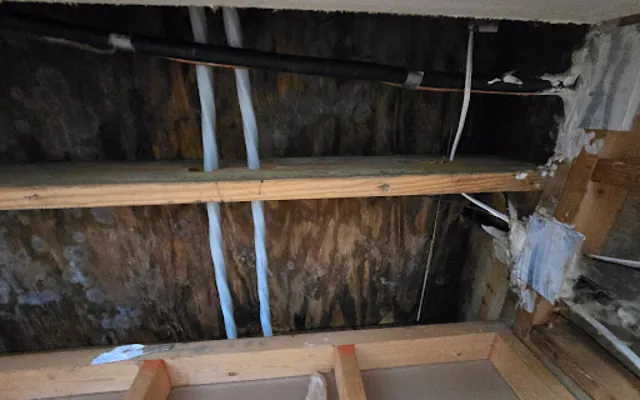
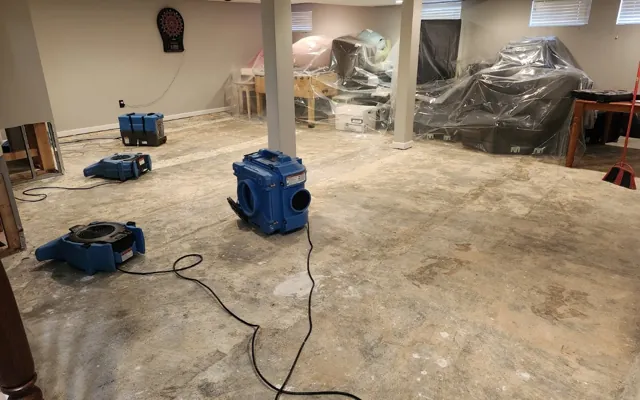
Storm water intrusion through roofs is a common call in Spring Valley, CA. Local crews respond fast to contain the leak, dry the structure to IICRC standards, and document the cause for a clear insurance claim.

A team inspects the roof line and attic space to find where storm water entered the home. They map the moisture spread across ceilings and framing to understand the full scope of the Spring Valley job.
Technicians tarp or contain the entry point to stop more water. Then they remove saturated attic insulation and use air movers and dehumidifiers to dry the wood framing and ceiling materials thoroughly.
The crew continues drying until reaching target moisture levels. They document the storm as the true cause with photos and meter readings, providing clear proof for the homeowner's insurance claim process.

Storm-driven roof water cleanup in Spring Valley typically runs from about $1,200 to $5,000 depending on how much attic insulation and ceiling drywall is saturated, how far the water traveled inside, and how much material must be removed. A single localized leak caught early sits on the low end, while widespread attic and ceiling saturation sits toward the high end. The crew documents the true storm source with moisture readings and photos so the homeowner can submit an accurate claim, since freeze-related coverage terms rarely apply here.
In Spring Valley, CA, older homes across its valley-and-canyon terrain are prone to roof leaks during the winter's atmospheric river storms. This weather drives water under aging shingles, leading to attic and ceiling damage that requires prompt restoration to prevent mold and structural issues. Spring Valley's terrain and housing stock create specific risks. Mid-century homes have aging roofs, and valley drainage can concentrate stormwater runoff. The area's mild climate means rain, not ice, is the main culprit, but winter atmospheric rivers can push water into vulnerable attics. From Spring Valley, crews also cover nearby Imperial Beach, La Jolla, La Mesa, Bonita, Lemon Grove, Del Cerro. See every neighborhood and town on the full service area page.
See all areas servedEvery loss is photographed, measured, and logged from the first visit, so the paperwork holds up with the insurance carrier.
Technicians follow recognized IICRC drying standards and prove it with daily moisture readings on Spring Valley homes, not guesswork.
Emergency dispatch any hour of the day or night, with a real crew on the way across San Diego County, not a callback in the morning.
A real crew dispatched any hour, not a callback in the morning.
Trained technicians following recognized IICRC drying standards.
Truck-mounted, portable, and submersible for any size loss.
The loss is documented and billed to the carrier directly.
Coverage depends on the policy, but crews document the damage as storm-related water intrusion, which is a common covered peril. Freeze-related coverage terms rarely apply in the mild Spring Valley, CA climate, so accurate cause documentation is critical for the claim.
Drying time depends on the extent of saturation and home conditions. For a typical Spring Valley attic job, it often takes 2 to 4 days of continuous operation with industrial equipment to reach the verified dry standard before equipment is removed.
Crews are on call 24 hours a day and can be on the way to Spring Valley within the hour.
Call (858) 533-0936