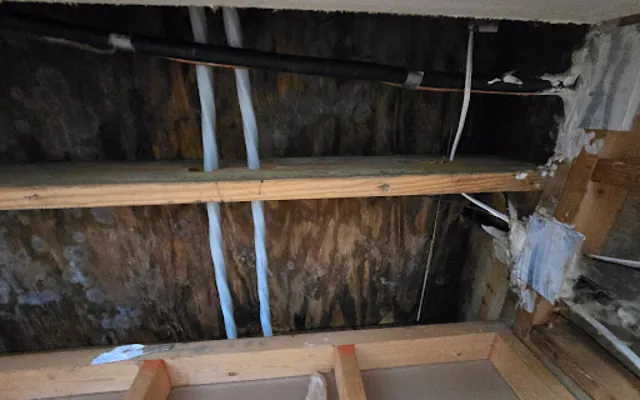
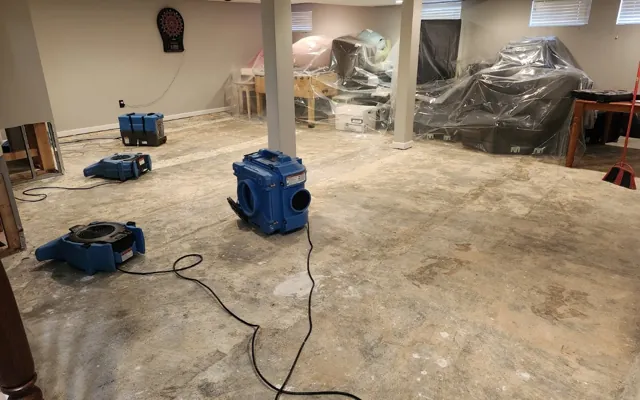
For Coronado, CA homeowners dealing with storm-driven attic and ceiling water, local crews respond within about an hour to dry the home to IICRC-standard moisture targets, not freeze thresholds.

A technician inspects the attic and ceilings to map where storm water entered and how far moisture spread. In Coronado homes, they look for signs of corrosion or failed seals that allowed the intrusion.
The crew works to tarp the leak source and sets up air movers and dehumidifiers to dry framing and wall tops. Saturated insulation that cannot dry properly is safely removed from the attic space.
Drying continues until moisture meters confirm target levels are met. The team provides photo documentation and moisture readings showing the storm as the cause, which is key for claims in this area.

Storm-driven roof water cleanup in Coronado typically runs from about $1,200 to $5,000 depending on how much attic insulation and ceiling drywall is saturated, how far the water traveled inside, and how much material must be removed. A single localized leak caught early sits on the low end, while widespread attic and ceiling saturation sits toward the high end. The crew documents the true storm source with moisture readings and photos so the homeowner can submit an accurate claim, since freeze-related coverage terms rarely apply here.
In Coronado, CA, the island's historic beach homes and newer waterfront construction face unique moisture pressures. Marine-layer humidity and salt air accelerate corrosion in plumbing and roof flashings, while the high water table near the bay increases the risk of slab leaks. This coastal environment means water intrusion often stems from storm damage rather than ice dams. Roof water damage in Coronado typically comes from Pacific storms, not freeze cycles. The marine layer's persistent humidity and corrosive salt air can degrade roof seals and flashings over time, making older homes here more vulnerable to sudden leaks during heavy rain. From Coronado, crews also cover nearby North Park, Shelltown, Mission Hills, Hillcrest, Southcrest, South Park. See every neighborhood and town on the full service area page.
See all areas servedEvery loss is photographed, measured, and logged from the first visit, so the paperwork holds up with the insurance carrier.
Technicians follow recognized IICRC drying standards and prove it with daily moisture readings on Coronado homes, not guesswork.
Emergency dispatch any hour of the day or night, with a real crew on the way across San Diego County, not a callback in the morning.
A real crew dispatched any hour, not a callback in the morning.
Trained technicians following recognized IICRC drying standards.
Truck-mounted, portable, and submersible for any size loss.
The loss is documented and billed to the carrier directly.
No, true ice dam formation is rare in Coronado's mild coastal climate. Most attic water damage here results from Pacific storm intrusion, where wind driven rain exploits vulnerabilities in older roof flashings or seals corroded by the salt air.
The timeline depends on the extent of saturation and the home's construction. For a localized leak caught early, drying may take a few days. Widespread attic and ceiling saturation in a larger Coronado home can require a week or more of monitored drying to meet standards.
Crews are on call 24 hours a day and can be on the way to Coronado within the hour.
Call (858) 533-0936